Restaurant Opening Furniture Timeline: When to Order (2026 Guide)
A backward schedule for restaurant furniture: design freeze, drawings, sampling, production, ocean freight, customs and install, with week-by-week tables.
Short answer: For imported custom restaurant furniture, release the order roughly 14-20 weeks before the furniture install date if the designs are already approved, and 20-28 weeks if drawings and samples still have to be developed. The schedule is driven by production (typically 30-45 days for standard designs, 45-60 days for custom work after approvals), ocean transit, customs clearance and a buffer. Work backwards from the install date, not forwards from the order date.
Furniture is one of the last trades into a new restaurant and one of the first things a guest sees. When it is late, opening dates move, staff training happens in an empty room and the soft opening is cancelled. This guide sets out the timeline we use at Rollout Seat (a line by EASEN Commercial Furniture) to plan store openings, with the variables that change it.
What are the stages of a restaurant furniture order?
| Stage | What happens | Typical duration |
|---|---|---|
| Design freeze | Layout, seat count and item list fixed | Depends on design team |
| Drawings | Shop drawings issued, reviewed, approved | 1-3 weeks per round |
| Sampling | Pre-production samples built, reviewed, signed | 2-4 weeks incl. shipping or video review |
| Materials | COM fabric arrives; special finishes sourced | 1-4 weeks, can overlap drawings |
| Production | Frames, upholstery, metal, finishing, inspection | Typically 30-45 days standard; 45-60 days custom |
| Origin logistics | Packing, trucking to port, export clearance, vessel cut-off | About 1 week |
| Ocean transit | Port to port | See table below |
| Destination | Customs clearance, drayage, devanning, final mile | 1-2 weeks typical |
| Install | Placement, assembly, leveling, fixing | 1-5 days per store |
For a chain with a locked package, the drawing and sampling stages are already done; each store order starts at production. That is the single biggest advantage of a standard package.
How long does ocean freight take from South China?
Transit times vary by carrier, routing, season and port congestion. Typical port-to-port ranges from South China ports such as Nansha, Shekou or Yantian:
| Destination | Typical port-to-port transit |
|---|---|
| US West Coast (Los Angeles / Long Beach, Oakland, Seattle) | About 2-3 weeks |
| US East Coast (New York / New Jersey, Savannah) | About 4-6 weeks |
| US Gulf (Houston) | About 4-6 weeks |
| Canada West (Vancouver) | About 2-3 weeks |
| Canada East (Montreal, Halifax) | About 4-6 weeks |
| UK (Felixstowe, Southampton, London Gateway) | About 5-7 weeks |
Inland destinations add rail or truck time after the port. Your forwarder will give current schedules; use them rather than averages when you set dates.
Backward schedule: a worked example
Example: a fast-casual store in the US Midwest, furniture install planned for week 0, using a locked standard package (no new drawings or samples).
| Weeks before install | Milestone |
|---|---|
| -1 | Furniture delivered to site; install crew on standby |
| -2 | Buffer week (inspection delays, appointment changes, weather) |
| -3 | Customs clearance complete; container to warehouse or cross-dock; final-mile booking |
| -4 to -8 | Ocean transit to East Coast or West Coast plus rail to Midwest |
| -9 | Origin: container loaded, export clearance, vessel departs |
| -10 to -16 | Production (typically 30-45 days for standard designs) |
| -17 | Order released with store quantities, revision numbers and delivery address |
That puts order release about 17 weeks before install. For a West Coast store with no inland leg it could be 14 weeks; for a new custom item requiring drawings, samples and 45-60 days of production, add 6-10 weeks.
What delays restaurant furniture most often?
| Delay | Typical cause | Prevention |
|---|---|---|
| Late approvals | Drawings sit with the design team | Set review turnaround times in the program |
| COM late or short | Fabric ordered late; wrong quantity | Order COM at drawing approval using the manufacturer's yardage |
| Design change after release | Plan change on site | Lock the item list at design freeze; changes create new revisions |
| Missed vessel | Production finishes after cut-off | Plan production to finish one week before cut-off |
| Customs hold | Missing documents, classification queries, exams | Complete commercial invoice, packing list and HTS codes with your broker in advance |
| Site not ready | Flooring or paint late | Hold furniture at a warehouse; don't deliver into an active construction site |
Step-by-step: setting a store's furniture schedule
- Fix the install date with the construction manager - usually after flooring, paint and ceiling are complete and before the store's training period.
- Choose the arrival point - site, local warehouse or a regional consolidation center.
- Get current transit times from your forwarder for the route and season.
- Confirm production time in the manufacturer's quote for the specific items.
- Add origin and destination time - about one week at origin and one to two weeks at destination for clearance and final mile.
- Add a buffer of one to two weeks.
- Count back to the order release date, and back again to the date the item list must be frozen.
- Publish the schedule to design, construction, procurement and the manufacturer, with named owners for each approval.
How do multi-store rollouts change the timeline?
With several openings a year, you are managing a pipeline rather than a project:
- Reserve production slots against the development calendar so busy seasons do not push your stores back.
- Combine stores in containers when openings are close together and in the same region; it reduces freight per store but ties two openings to one sailing.
- Phase deliveries for large stores or stores with staged openings (for example patio seating later).
- Hold a small regional buffer stock of high-quantity items like chairs, so a late or damaged shipment does not stop an opening.
Our guide to kitting, labelling and phased deliveries covers how store kits are packed and sequenced.
Which items should be ordered first?
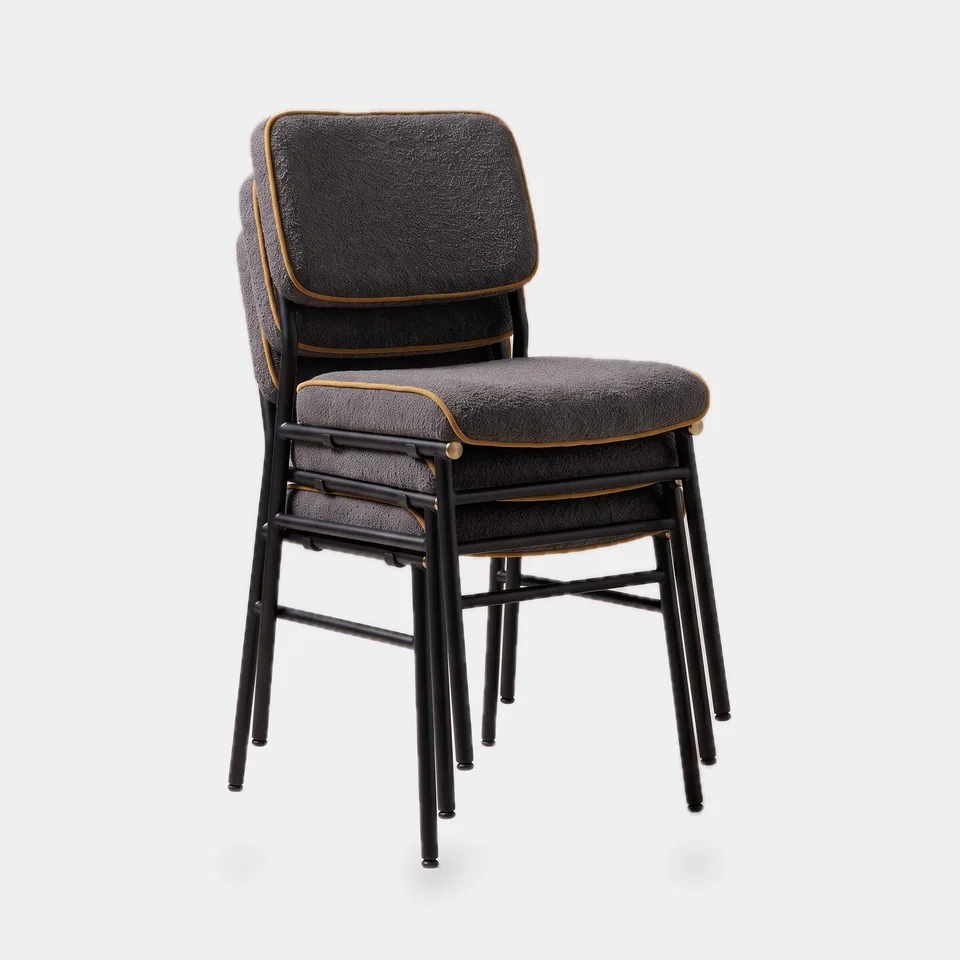
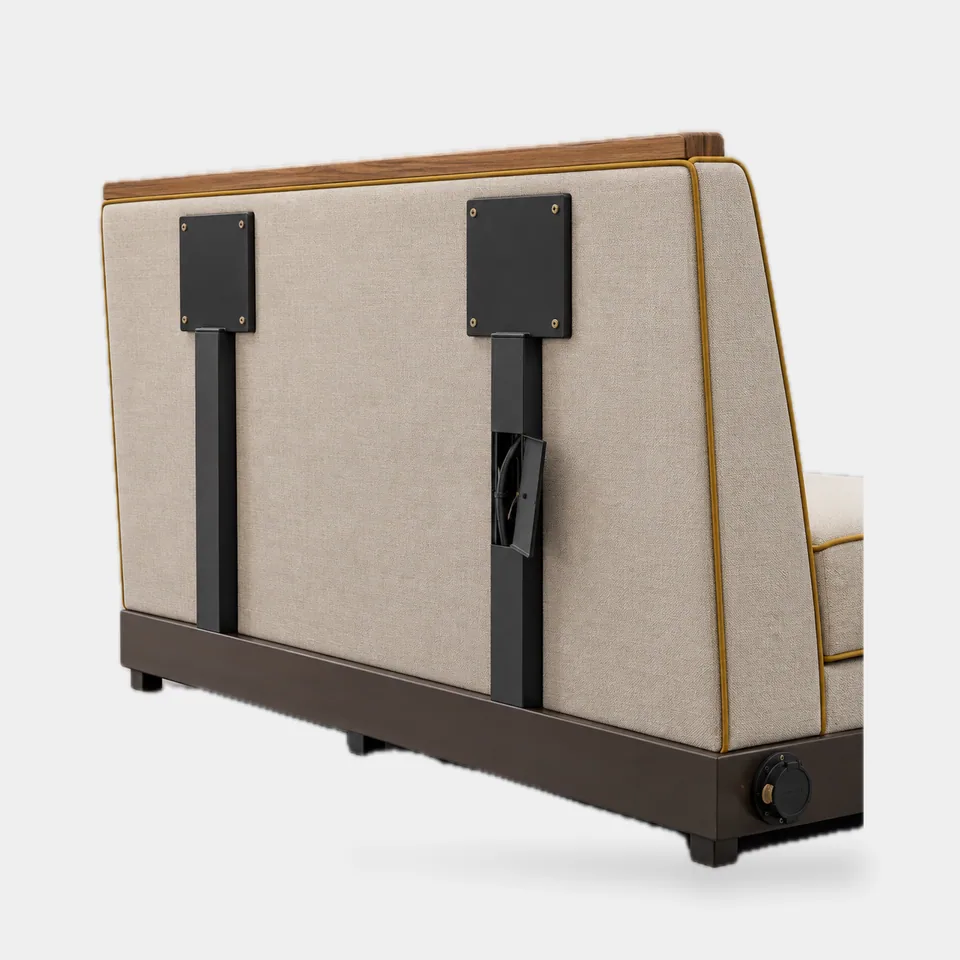
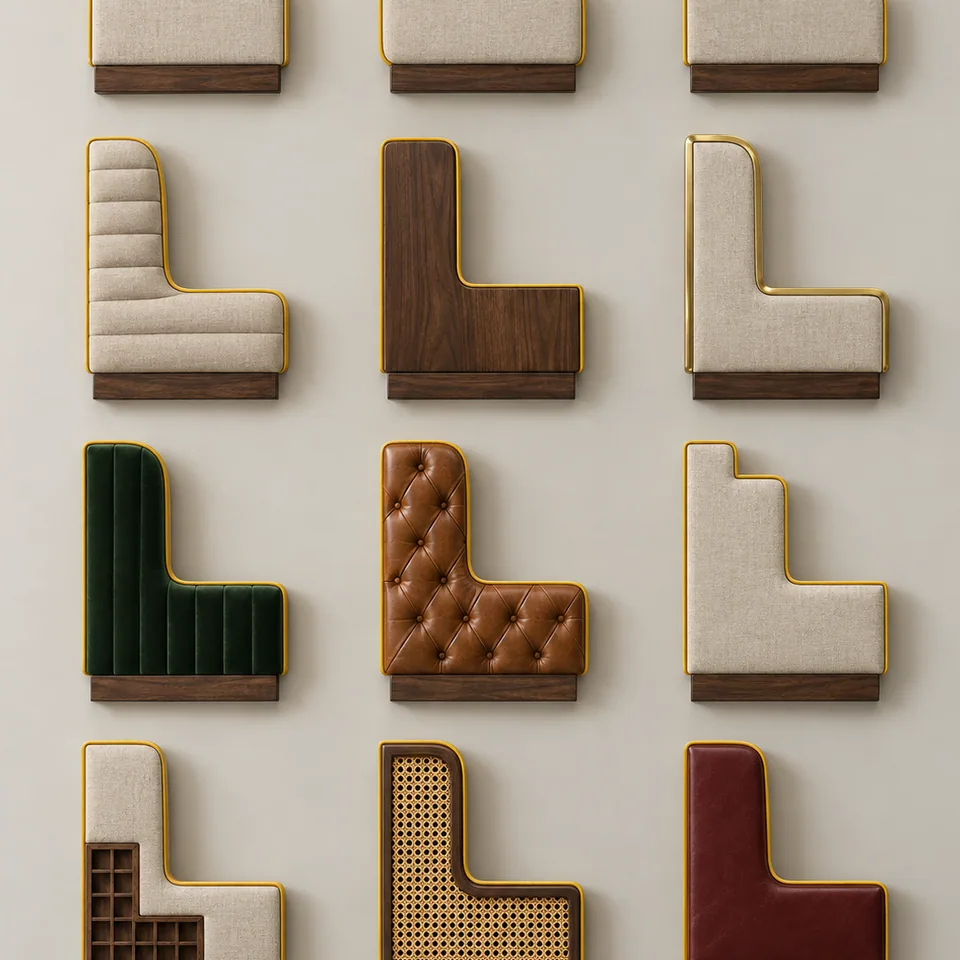
Order first the items with the longest lead time and least flexibility: custom booths, curved booths and anything with COM fabric. Standard chairs and tables can often follow. In our program lines, rollout-engineered booths are designed to keep custom work inside a standard platform so lead times stay predictable, and the Program Side Chair is a repeat item that can be held as regional stock.
How much time does a locked package save?
The difference between a first store and a repeat store is mostly the time spent before production starts. A typical comparison:
| Stage | First store (new custom items) | Repeat store (locked package) |
|---|---|---|
| Drawings | 2-6 weeks including review rounds | None - existing revision |
| Samples | 2-4 weeks | None - reference sample on file |
| COM sourcing | 1-4 weeks | Reorder same fabric code and dye-lot plan |
| Production | Typically 45-60 days | Typically 30-45 days |
| Freight, customs, final mile | Same | Same |
In practice, a repeat store order can be released six to ten weeks later than a first store for the same install date, which gives development teams more room to confirm sites before committing.
Common mistakes
- Scheduling forwards from the order date instead of backwards from install, which hides the real deadline for approvals.
- Treating transit as fixed. Port congestion and seasonal peaks can add weeks; buffer for it.
- Releasing an order before the item list is frozen, then changing quantities mid-production.
- Forgetting customs paperwork until the container is on the water.
- Delivering into a live construction site, where furniture is damaged or stolen before opening.
- No buffer week, so a single missed appointment moves the opening.
FAQ
How far in advance should a restaurant order furniture?
For imported custom furniture, about 14-20 weeks before install when designs are approved, and 20-28 weeks when new drawings and samples are needed. Domestic quick-ship items can be shorter, but custom seating rarely is.
Can furniture be air-freighted if a store is late?
Small quantities of light items, such as a few chairs or replacement pads, can be air-freighted at a much higher cost. Booths and tables are rarely practical by air. Plan buffers and regional spares instead.
When should COM fabric be ordered?
As soon as shop drawings are approved and the manufacturer has issued yardage, so the fabric arrives before production starts. Late COM is one of the most common causes of furniture delays.
Should furniture go to the site or a warehouse?
If the site is ready and secure on the delivery date, direct delivery saves handling. If not, a local warehouse or consolidation center protects the furniture and lets the install crew receive it on the day they need it.
Tell us your store formats, how many openings are planned in the next 12-24 months and where they are. We will come back with a package proposal, unit costs per format and a sample plan.
Request a quote