How to Build a Restaurant FF&E Standard Package for a Chain
How chains and franchise systems build a standard furniture (FF&E) package: store formats, item lists, seat counts, revision control, samples, spares and costing.
Short answer: A restaurant FF&E standard package is a locked list of furniture items - each defined by drawing, finish codes and an approved reference sample - with standard quantities per store format, so every new store is ordered against the package instead of re-specified. Build it from the prototype, keep the SKU count low, put every item under revision control, and price it per format so development teams can budget a store before the site is signed.
Most chains do not set out to have inconsistent stores. It happens one substitution at a time: a different dye lot here, a local millworker's host stand there, a booth an inch deeper because the drawing was not attached to the PO. A standard package stops the drift. This guide sets out how we at Rollout Seat (a line by EASEN Commercial Furniture) help development and procurement teams build one.
What is in a restaurant FF&E standard package?
A complete furniture package for a chain typically contains:
| Component | What it is | Who owns it |
|---|---|---|
| Item list | Every furniture item with a unique code | Design/brand team |
| Item drawings | Dimensioned drawings per item and revision | Manufacturer, approved by brand |
| Finish schedule | Each material code defined once (fabric, laminate, metal, stain) | Design/brand team |
| Reference samples | Signed physical samples of key items and finishes | Brand team holds; manufacturer holds a twin |
| Format matrix | Standard quantity per item per store format | Development/construction |
| Packing and labelling standard | How each store's kit is packed and marked | Procurement with manufacturer |
| Spares policy | Attic stock and replacement parts | Operations |
| Unit costs | Price per item and per format, with validity | Procurement |
FF&E in a restaurant usually also covers lighting, decor, smallwares and equipment, but furniture is the largest, most visible and most variable part. This guide focuses on loose and fixed seating, tables and front-of-house furniture.
Step 1: Define store formats
Most brands operate two to four formats - for example an inline unit, an end-cap, a freestanding pad site and an urban small format. Each needs a standard seat count and a standard furniture mix. Use rules of thumb to sanity-check seat counts against dining area, then confirm against your actual prototype plans and local codes:
| Service style | Typical dining area per seat |
|---|---|
| Fine dining | 18-20 sq ft (1.7-1.9 m2) |
| Full service, casual | 12-15 sq ft (1.1-1.4 m2) |
| Counter service | 18-20 sq ft (1.7-1.9 m2) |
| Quick service / fast food | 11-14 sq ft (1.0-1.3 m2) |
These are planning ranges only. Occupant load, exits and aisle widths are set by the building and fire codes that apply to each site, and ADA 2010 requires at least 5 percent of seating spaces at dining surfaces to be accessible, with 36 in (915 mm) minimum accessible routes.
Step 2: Choose items that repeat
The fewer unique items, the more consistent the stores, the easier the reorders and the lower the unit cost. Practical techniques:
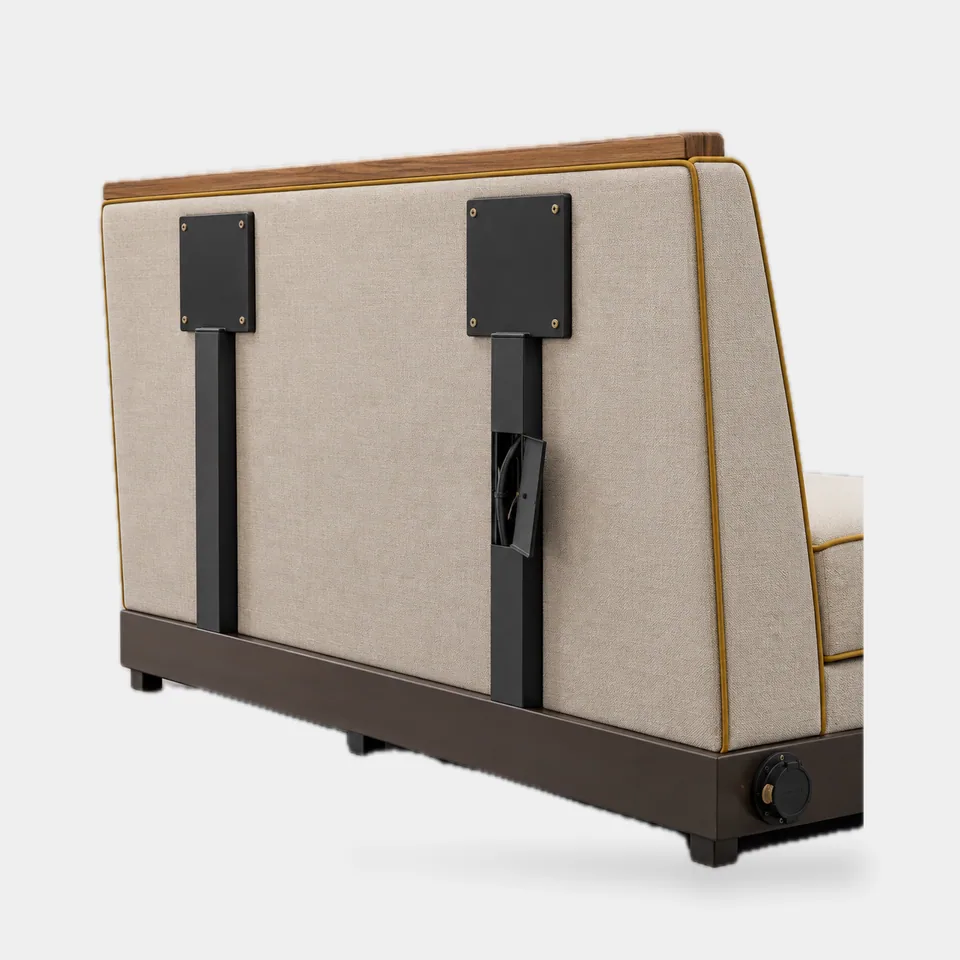
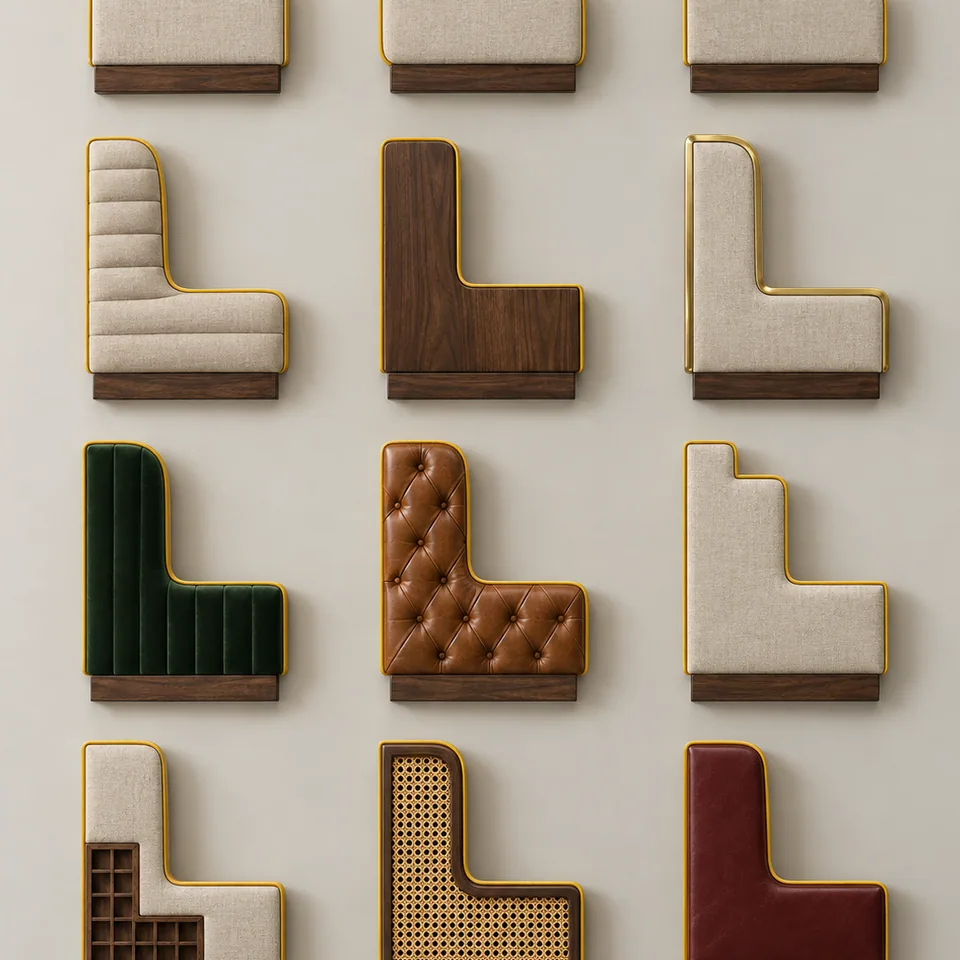
- Use a modular booth system. Straight, corner, island and curve modules sharing one seat height and depth - see our Modular Booth System - let layouts change while the parts list stays the same.
- Use one table base family. A single column profile across two-tops, four-tops, round and counter tables means top sizes change by store without new base SKUs.
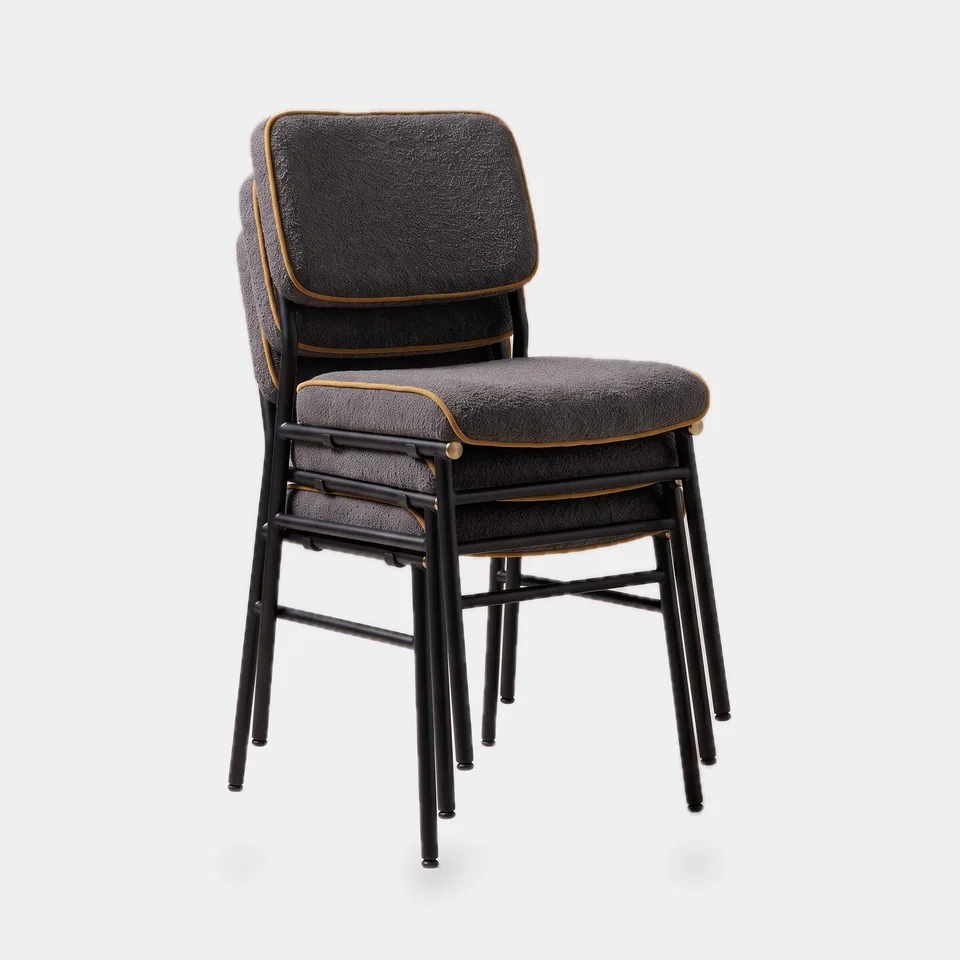
- Reduce back-height variants. One seat box with interchangeable backs, like the TriHeight Booth Platform, covers several zones with one core component.
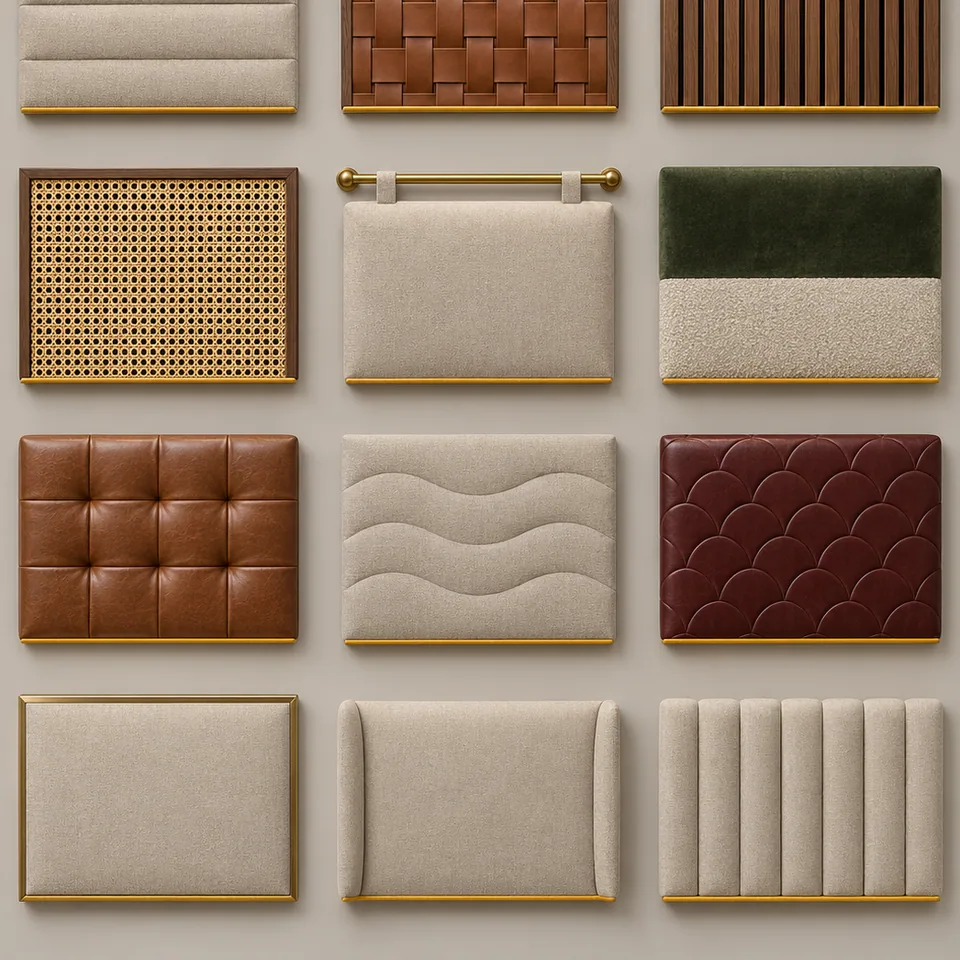
- Limit cover materials. Two or three fabric or coated-fabric codes are usually enough; each additional code multiplies dye-lot risk and spares.
Step 3: Lock each item under revision control
Each item needs a drawing with a revision number, a finish code list and - for key items - a signed reference sample. The rules that make this work:
- Nothing ships without a drawing revision on the PO.
- Any change to dimensions, construction or finish creates a new revision; the old one is not edited.
- The change log states which stores receive the new revision.
- Reference samples are labelled with item code and revision and kept by both the brand and the manufacturer.
- Flagship or regional variants are separate revisions, never "the standard with a tweak".
Step 4: Build the format matrix
The format matrix turns the item list into store orders. A simplified example:
| Item code | Item | Inline (80 seats) | End-cap (110 seats) | Pad site (140 seats) |
|---|---|---|---|---|
| BS-01 | Straight booth module | 8 | 12 | 14 |
| BS-02 | Corner module | 2 | 2 | 4 |
| BS-03 | Island double booth | 2 | 3 | 4 |
| CH-01 | Side chair | 24 | 32 | 40 |
| ST-01 | Bar stool | 8 | 10 | 12 |
| TB-01 | Two-top table | 10 | 14 | 16 |
| TB-02 | Four-top table | 6 | 8 | 12 |
| FH-01 | Host stand | 1 | 1 | 1 |
Quantities are illustrative; your prototype plans set them. Development teams adjust the variable lines (straight modules, chairs) to each site plan within agreed limits, and anything outside the matrix goes to the brand team for approval.
Step 5: Sample, approve and freeze
Build pre-production samples of the high-quantity and high-visibility items - usually the straight booth, the main chair, a table and the host stand. Test them in a real store or a mock-up: sit, clean, stack, move, and look at them in the store's lighting. When approved, sign and label them as reference standards and freeze the package for the rollout.
Step 6: Cost per format, not per item
Development teams need a furniture budget per store before a site is signed. Price the package as a cost per format, with the variable lines shown separately, and state what is included: packing, labelling, freight terms (FOB, CIF or DDP) and spares. Revisit pricing at agreed intervals rather than per order.
Step 7: Plan spares and repairs
Furniture wear is predictable. A spares policy prevents rush orders and mismatched replacements:
- 3-5 percent spare chairs and stools per format, held regionally
- Spare seat and back pads for booths with removable pads
- Spare front-edge strips and corner guards for high-wear booth positions
- Spare table tops for high-damage locations
- All spares ordered by item code and revision
Booth constructions with replaceable parts, such as the SwapPad Booth, make this policy far cheaper to run.
Checklist: is your package ready to roll out?
- Every item has a code, drawing revision and finish code list
- Reference samples signed for high-quantity and high-visibility items
- Format matrix agreed with development and construction
- Accessible seating included in every format
- Flammability requirements stated per destination market
- Packing and labelling standard agreed
- Spares policy and holding location defined
- Unit costs per format with stated validity and terms
- Change process documented: who can approve a new revision
Common mistakes
- Specifying by photograph. A photo is not a standard; drawings and samples are.
- Too many SKUs. Every unique item adds lead-time risk and complicates reorders.
- Allowing local substitutions. One franchisee's "equivalent" chair becomes the standard nobody approved.
- No revision control. When a change is made silently, stores stop matching and nobody knows which is correct.
- Ignoring accessible seating until a site inspection.
- No spares, so the first damaged booth triggers an urgent, mismatched replacement.
FAQ
How many items should a restaurant furniture package include?
Most chain packages can be built with fifteen to thirty items including variants. Keep core seating to a handful of booth modules, two or three chairs or stools and one table base family, and add front-of-house pieces.
Should franchisees be allowed to choose their own furniture?
Many franchisors require approved items only, sometimes from approved suppliers, to protect the brand. If franchisees can choose, define approved alternatives as separate revisions in the package so they are still controlled.
How often should a furniture standard be updated?
Many brands review the package with each prototype refresh, often every few years, and make interim changes only through the revision process. Avoid continuous small changes; they erode consistency.
What is a reference standard sample?
A signed physical sample that defines acceptable quality and appearance for an item. Production for every store is checked against it, which makes approvals objective and disputes rare.
Tell us your store formats, how many openings are planned in the next 12-24 months and where they are. We will come back with a package proposal, unit costs per format and a sample plan.
Request a quote