Importing Restaurant Furniture into the US: FOB vs DDP, HTS and Duties
Import basics for restaurant chains buying furniture from China: FOB, CIF and DDP compared, HTS 9401/9403, Section 301 duties, ISF, bonds and what to ask your broker.
Short answer: Restaurant furniture imported into the US is usually classified under HTS chapter 94 - seats in heading 9401 and tables and other furniture in 9403 - and China-origin goods currently face additional duties on top of the normal rate, which have changed several times since 2018. Under FOB you control freight, customs and duties through your own forwarder and broker; under DDP the supplier delivers duty-paid for an all-in price. Either can work for a chain; the right choice depends on how much control and visibility your team wants. Always confirm classification and duty rates with a licensed customs broker before you budget.
This guide gives development and procurement teams the import basics they need to compare quotes and plan landed cost. It is general information from a manufacturer's perspective, not legal or customs advice; tariff rules change, and your customs broker is the authority for your shipments. Rollout Seat (a line by EASEN Commercial Furniture) ships from South China and quotes FOB, CIF or DDP on request.
FOB, CIF or DDP: what is the difference?
Incoterms 2020 define who pays for and bears the risk of each leg. The three terms most used for furniture from China:
| FOB (port of loading) | CIF (destination port) | DDP (delivered) | |
|---|---|---|---|
| Supplier pays | Packing, inland to port, export clearance, loading | FOB plus ocean freight and minimum insurance | Everything to your door, including import clearance and duties |
| Buyer pays | Ocean freight, insurance, import clearance, duties, delivery | Import clearance, duties, destination charges, delivery | Usually unloading and install |
| Risk passes | When goods are on board the vessel in China | When goods are on board in China (even though seller paid freight) | At delivery to the named place |
| Importer of record | Buyer (or buyer's agent) | Buyer | Seller or seller's agent |
| Best for | Chains with a forwarder and broker | Buyers wanting a simple ocean quote | Buyers wanting one all-in price |
Key points:
- FOB gives control. Your forwarder books the space, you see the schedule, and your broker manages classification and duty. Most established chains import FOB.
- CIF looks simple but shifts little. Risk still passes in China, and destination charges can be significant; read what is included.
- DDP gives one number. The supplier or its agent acts as importer of record and pays duties; you need confidence that classification, valuation and compliance are handled correctly, because goods enter under someone else's records.
How is restaurant furniture classified (HTS)?
The Harmonized Tariff Schedule of the United States (HTSUS) classifies most furniture in chapter 94. Broadly:
| Heading | Covers | Restaurant examples |
|---|---|---|
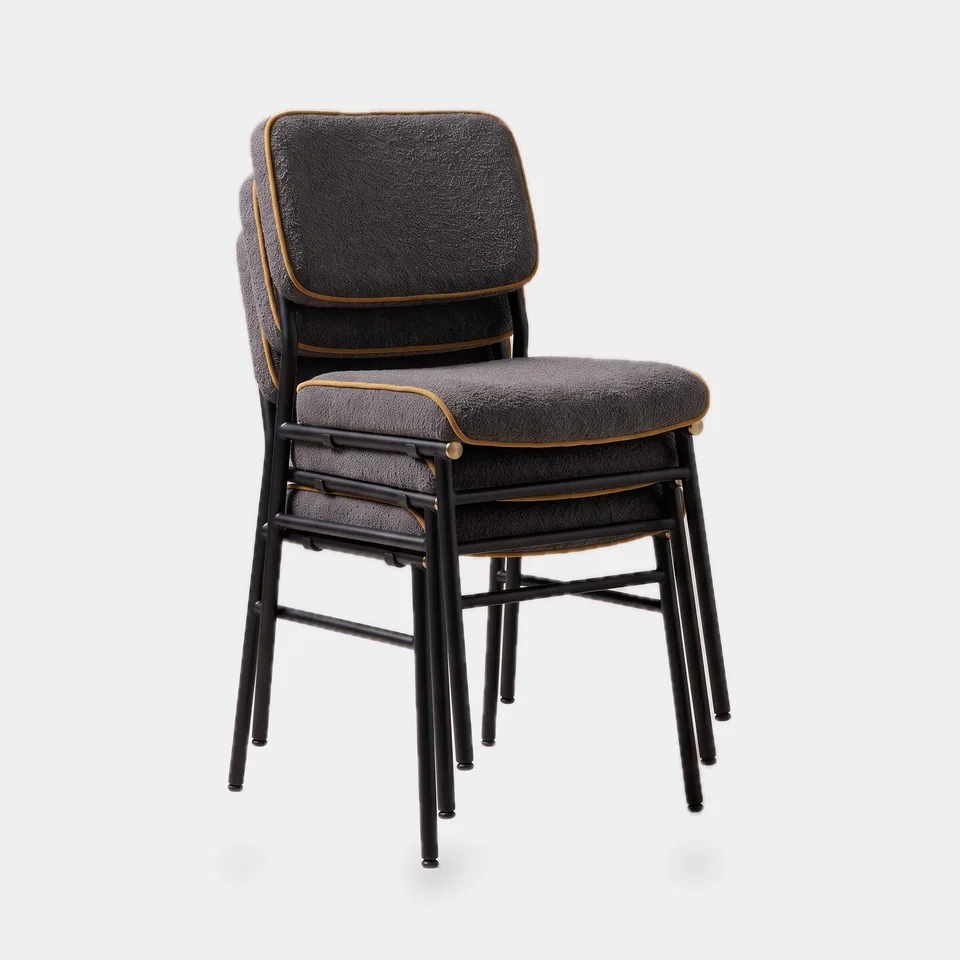
| 9401 | Seats (other than those of heading 9402) and parts | Chairs, stools, booths/banquettes as seating, lounge seating, upholstered seats |
| 9403 | Other furniture and parts | Tables, host stands, wall-mounted furniture, cabinets |
Within each heading, the subheading depends on construction - for example whether a seat is upholstered and whether its frame is wood or metal - and on whether the item is a complete article or a part. Booths, combined booth-and-table units, and upholstered wall panels may raise classification questions; panels in particular may fall outside chapter 94 depending on construction and function. Your broker determines the classification; the supplier should provide clear descriptions, materials, construction and photos for each item to support it.
What duties apply to China-origin furniture?
Duty is calculated on the customs value, normally the transaction value of the goods (FOB value, excluding international freight and insurance for US purposes). The total can include several layers:
- General (MFN) duty from the HTSUS. Many furniture subheadings in 9401 and 9403 carry a low or zero general rate.
- Section 301 duties on goods of Chinese origin, in place since 2018-2019 and covering most chapter 94 furniture at rates that have been revised over time.
- Other measures introduced from 2025, which have included additional tariffs on Chinese-origin goods and Section 232 actions covering certain upholstered wooden furniture. These have been changed, adjusted and challenged repeatedly.
- Fees such as the Merchandise Processing Fee (MPF) and, for ocean shipments, the Harbor Maintenance Fee (HMF).
Because the rates and exclusions change, do not budget a store from an old quote or a blog post - including this one. Ask your broker for the current rate stack for each HTS code at the time you plan the shipment, and again before it arrives.
What paperwork does a furniture shipment need?
| Document or filing | Who prepares it | Notes |
|---|---|---|
| Commercial invoice | Supplier | Item descriptions, quantities, unit values, country of origin, materials |
| Packing list | Supplier | Cartons per item and store, weights, dimensions |
| Bill of lading | Carrier / forwarder | Ocean transport document |
| ISF (Importer Security Filing, "10+2") | Importer or its agent | Must be filed at least 24 hours before cargo is loaded on the vessel bound for the US |
| Customs entry and entry summary | Customs broker | Classification, valuation, duty payment |
| Customs bond | Importer | Continuous or single-entry bond |
| Lacey Act declaration | Importer / broker | May be required for wood-containing products under certain HTS codes; your broker will confirm |
| Composite wood documentation | Supplier | If items contain MDF, particleboard or hardwood plywood, TSCA Title VI formaldehyde rules and labelling may apply |
Ask the supplier for item-level material breakdowns (wood species, panel types, metal, foam, fabric) early. They feed classification, Lacey Act declarations and composite wood compliance.
How to compare quotes on a landed-cost basis
Unit price is only part of the cost. For each store kit, compare:
- Ex-works or FOB value of the goods
- Ocean freight per container, divided by the share of the container used
- Insurance
- Duties and fees at the current rate stack for each HTS code
- Destination charges: port fees, drayage, devanning, warehousing
- Final mile to site
- Installation time and crew
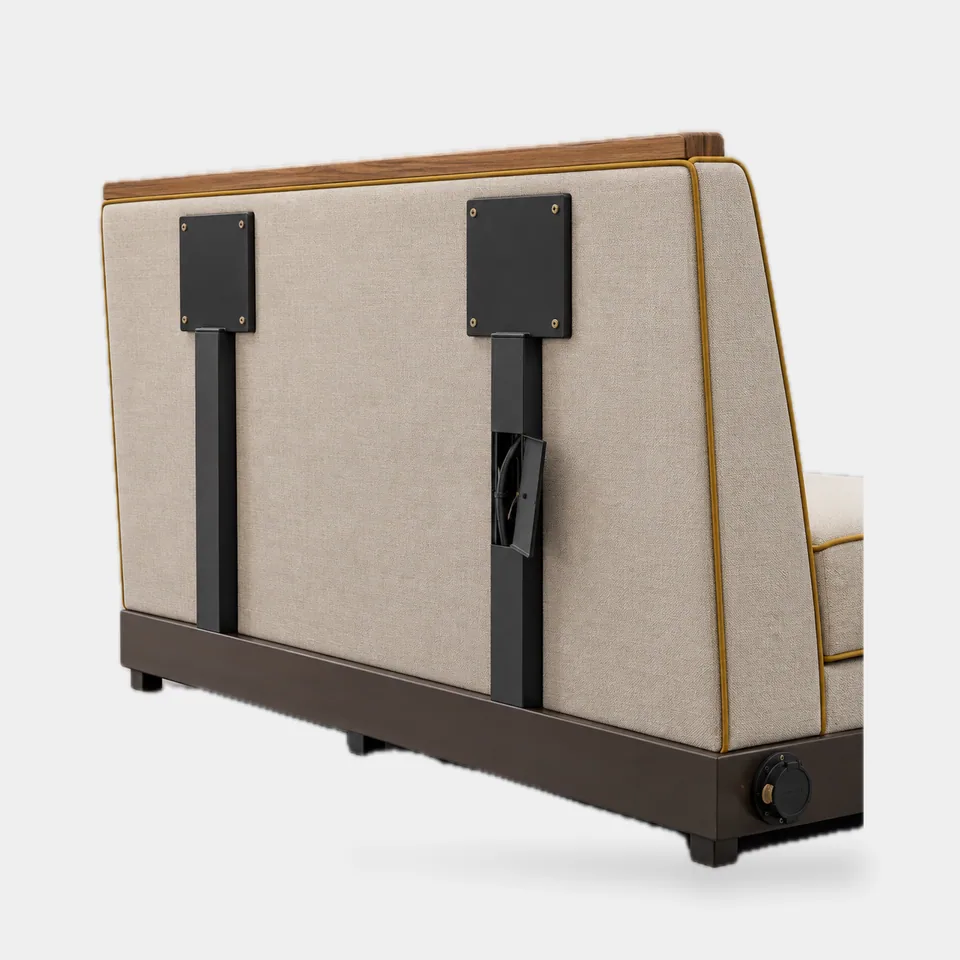
Furniture designed for packing changes this calculation. Flat-pack and nesting booths, such as the NestPack Booth and the FlatShip Booth, lower freight per seat; knock-down tables reduce volume further. Ask suppliers for the packed volume (CBM) of each store kit, not just of individual items.
Container basics
| Container | Nominal capacity | Practical furniture load |
|---|---|---|
| 20 ft standard | About 33 m3 (1,165 cu ft) | About 25-28 m3 |
| 40 ft standard | About 67 m3 (2,366 cu ft) | About 55-60 m3 |
| 40 ft high cube | About 76 m3 (2,684 cu ft) | About 65-68 m3 |
Upholstered furniture is light for its volume, so containers usually fill by volume long before weight. Mixed loads - booths, chairs and tables for one or two stores - are common and make better use of space than shipping item types separately.
Checklist before the first shipment
- Customs broker appointed; continuous bond in place if you import regularly
- HTS classification agreed for each item code, with supporting descriptions and photos
- Current duty rate stack confirmed for each code
- ISF data flow agreed between supplier, forwarder and broker
- Material breakdowns collected for Lacey Act and composite wood checks
- Incoterm agreed and written on the PO and invoice
- Insurance arranged (who, what value, from where)
- Delivery appointment, unloading and receiving process at destination
Common mistakes
- Budgeting with outdated duty rates, then absorbing the difference on arrival.
- Vague invoice descriptions ("furniture parts") that trigger classification queries and holds.
- Late ISF filing, which can lead to penalties.
- Assuming DDP removes all risk. Compliance problems at entry can still delay your store.
- Ignoring destination charges when comparing FOB and DDP quotes.
- Shipping by item type instead of by store kit, which makes receiving and installing harder.
Our booth system items carry consistent item codes and material descriptions, which makes repeat classification and entry simpler for each store.
FAQ
Is FOB or DDP better for a restaurant chain?
Chains with an established forwarder and broker usually prefer FOB for control and visibility. DDP suits smaller programs or teams without import infrastructure, provided the supplier's importer arrangements are sound. We quote both.
What HTS code is a restaurant booth?
Booths used as seating are generally classified in heading 9401 (seats), with the subheading depending on frame material, upholstery and whether the item is complete or a part. Combined or built-in units can raise questions. Your customs broker should confirm the classification for each design.
Do Section 301 tariffs apply to restaurant furniture from China?
Most furniture of Chinese origin in chapter 94 has been subject to Section 301 duties since 2018-2019, and other measures have been added since 2025. Rates and exclusions change, so confirm the current position with your broker before each order.
Who files the ISF for furniture imports?
The importer of record is responsible, usually through its customs broker or forwarder, using data supplied by the seller. It must be filed at least 24 hours before the cargo is loaded at the foreign port.
Tell us your store formats, how many openings are planned in the next 12-24 months and where they are. We will come back with a package proposal, unit costs per format and a sample plan.
Request a quote